



Our team enjoys a 98% success rate across our Employment Pass applications and renewals over the years and can provide end-to-end foreign talent hiring assistance from ESD account registration to securing MyFutureJobs support letters, handling Immigration queries on your behalf, and more.

A Full Guide To Category 3 Employment Pass Applications
Malaysian Category 3 Employment Passes are designed for junior-level foreign professionals and technical staff necessary to support a company’s immediate operational needs.

Guess which one they are.
Although it carries the lowest requirements among all EP categories, revisions scheduled for June 2026 will introduce dependent privileges and longer validity periods, making it viable for a much broader population of expatriates that would previously need to apply under Category 2.
That said, Immigration review applications just as strictly, and for employers with a genuine need for a Category 3 EP application, this guide covers all you need to know to maximise approval chances.
Here’s how we’ve broken it down:
- Category 3 EP overview (including June 2026 revisions)
- application journey and timeline
- fees and required documents
- key evaluation factors
- common reasons for rejection
Of course, you’re welcome to get in touch directly with our resident EP expert Ariff.
Otherwise, let’s begin.
Category 3 EP overview
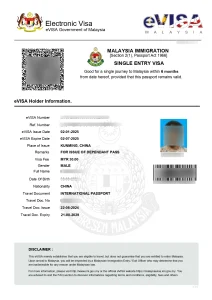
Category 3 EP holders will be eligible for Dependant Passes after June 2026.
As of publishing this guide in April 2026, Category 3 Employment Passes carry the following requirements and features.
| Feature | Category 3 |
|---|---|
| Minimum Salary | RM2,500 – RM4,999 / month |
| Validity | Up to 12 months |
| Use case | Junior executives, technical staff, entry-level specialists |
| Dependants | Not permitted |
| Renewability | Indefinite |
June 2026 updates
From June 2026 onwards, all EP categories will carry significant changes, with the following updates to Category 3.
| Feature | Current | June 2026 onwards |
|---|---|---|
| Minimum salary | RM3,000 / month | RM5,000 / month |
| Maximum validity | Up to 12 months | Up to 5 years |
| Dependents | Allowed | Legal spouse and children under 18 |
Additionally, Category 3 applications must include a clear succession plan to transition the role to a local hire over time.
Required documents
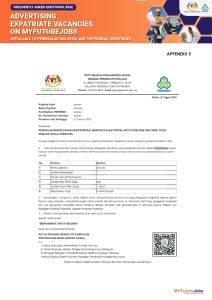
Sample MyFutureJobs support letter.
A typical Category 3 Employment Pass application requires the following:
- full colour copy of passport
- academic certificates Certified True Copy by either:
- Embassy, High Commission, or Consulate General of the applicant’s country
- Embassy, High Commission, or Consulate General in Malaysia, or
- HR head of the hiring company
- updated resume or CV
- stamped employment contract
- job description on company letterhead
- supporting document from Approving Agency / Regulatory Body (if applicable)
- MyFutureJobs support letter
Documents not in English must be accompanied by Certified True Copy English translations.
Typical steps & timeline
Employers who have never applied for an EP before have one extra step to take, and for a Category 3 EP, expect it to take four to six months in total depending on document readiness, regulatory approvals, and Immigration workload.
There are six main stages as shown below.
| Stage | Description | Estimated time |
|---|---|---|
| 1. ESD registration & activation | Company registration and activation via ESD portal | ~2 months |
| 2. JTK / approval agency clearance | Support letter from relevant authority (if applicable) | ~1 month |
| 3. MyFutureJobs compliance | Mandatory local hiring attempt (if required) | ~1 month |
| 4. Employment Pass submission | Application submission and Immigration assessment | ~2–3 months |
| 5. Approval & visa issuance | Approval letter and Visa With Reference (VDR) | ~2 weeks |
| 6. Endorsement & ePass | Final endorsement and pass issuance | ~2 weeks |
In addition to the ePass, the holder will also receive a physical card called an iKad which looks like this.
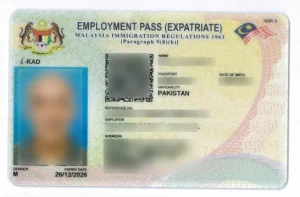
Don’t lose it!
For future applications, there is no need to register another ESD account, and renewals are much faster and can usually be completed within one to two months if there are no changes to role or salary.
Key evaluation factors

Immigration assesses Category 3 applications more strictly due to their lower salary threshold, focusing on:
- genuine need for short-term foreign hire
- clear justification for role
- salary alignment with job scope
- MyFutureJobs compliance
- MOHA exemption approval (if applicable)
Common reasons for rejection include:
- weak justification for foreign hire
- missing MOHA exemption approval
- salary and role mismatch
- failure to demonstrate temporary nature of role
- missing or incorrect CTC documents
Rejections don’t just delay the current hiring but can cause future requests to receive added scrutiny, it’s worth taking the time to understand Immigration requirements and ensuring everything is in order before submitting the application.
General Employment Pass eligibility requirements
For readers unfamiliar with Employment Passes in general, only employers that meet Immigration eligibility criteria may apply to hire expatriates, and both the role and applicant must meet minimum thresholds for the application to even be consisdered.
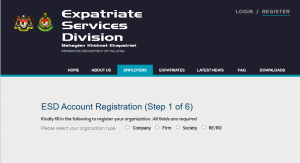
Registering an ESD account is every employer’s first step.
This is a condensed version of our full guide to EP application requirements which readers can refer to for full details.
Employer eligibility
- legally registered Malaysian entity (Sdn Bhd/ LLP / registered society)
- meet paid-up capital requirements (RM250,000 – RM500,000 depending on foreign equity)
- valid WRT / USS licenses for foreign ventures
- active ESD account
- sufficient operational and financial capacity to support expatriate salary
Expatriate eligibility
- Degree + 3 years’ experience, or
- Diploma + 5 years’ experience, or
- Technical certificate + 7 years’ experience
- relevant qualifications
- clean immigration history
Role requirements
For Category 3, the role must be technical or junior-level in nature for an employment contract no more than 12 months that cannot be readily filled by local candidates (proven via MyFutureJobs).
Why entrust MISHU for your EP application
Although employers are allowed to handle their own EP applications, Category 3 EPs are more heavily scrutinised and inexpereinced applicants are more likely to overlook small errors that cause delays or rejection.

When a misplaced comma sets you back six months.
An experienced visa service provider reduces risk by:
- pre-evaluating eligibility
- handling MOHA exemption applications
- ensuring correct EP category selection
- managing ESD and MyFutureJobs compliance
- verifying documentation before submission
Furthermore, they are also experienced in handling follow up queries from Immigration officers and can help direct expatriates with where to go and how to speak to officers when arriving in Malaysia. This obviously doesn’t just apply to us but to any of the highly capable visa application service providers in Malaysia – but we’d obviously prefer you to hire MISHU over them!