

Our team enjoys a 98% success rate across our Employment Pass applications and renewals over the years and can provide end-to-end foreign talent hiring assistance from ESD account registration to securing MyFutureJobs support letters, handling Immigration queries on your behalf, and more.

A Full Guide To Malaysian Employment Pass Renewals
Compared to the initial application, renewing a Malaysian Employment Pass (EP) is quite straightforward so long as the employment contract is valid and complies with conditions of the EP category applied for.
Of course, straightforward doesn’t mean easy or Immigration is any less strict!

Typo? Rejected!
For employers unfamiliar with the process, this guide explains how to ensure your first EP renewal is successful, broken down into:
- renewal eligibility requirements (including June 2026 updates)
- how and when to submit an EP renewal
- required fees and documents, and
- a possible alternative expatriate visa
Of course, you’re welcome to get in touch directly with our resident EP expert Ariff.
Otherwise, let’s begin.
EP renewal eligibility requirements
Renewal applications are assessed holistically as Immigration determines if:
- the employer is still eligible to employ expatriates
- the stated salary has been consistently paid
- the expatriate has had no disciplinary issues during their stay
- the expatriate’s passport still has a minimum validity period of 12 months, and
- the role satisfies revised June 2026 EP category requirements
If the above conditions are met, there is a high chance of successful renewal, and as the last requirement is probably the most difficult to meet, that’s what we’ll focus on.
2026 EP renewal requirement updates
All EP renewals from June 2026 onwards must comply with increased minimum salary requirements for their respective categories:
| Category | Current | Revised |
| 1 | RM10,000 | RM20,000 |
| 2 | RM5,000 | RM10,000 |
| 3 | RM3,000 | RM5,000 |
Category 2 and 3 EP applications may also need to be supported by a clear succession plan detailing how the employer plans to replace the expatriate’s role with a local hire within a specified period.
It’s not all bad: The revisions also come with increased maximum validity periods:
- Category 1: 5 years → Up to 10 years
- Category 2: 2 years → Up to 10 years
- Category 3: 1 year → Up to 5 years
Crucially, Category 3 holders will now be permitted to bring dependents, making it much more of a direct alternative to Category 2.
For the purposes of renewing an existing EP, the most relevant changes are the minimum salary requirements and succession plan.
How and when to submit an EP renewal
The renewal application is done via the employer’s ESD account, and once an EP has 90 days of remaining validity, a button to renew will appear.
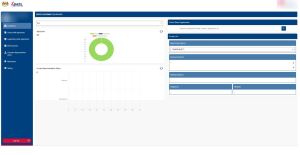
Although this means the earliest a renewal can be submitted is 90 days before expiry, we recommend starting the document compiling process a month in advance.
This way, submission can be made the moment it is available, giving employers the full 90 days as a buffer against unexpected delays.
Required documents
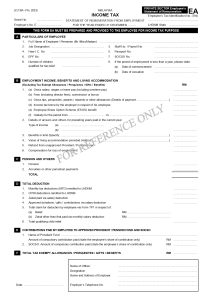
Better make sure your expat’s Form EAs are in order!
Ensure updated versions of the following documents are on hand:
- full colour copy of passport
- the last three (3) months’ payslips
- latest income tax filing documents
- updated and stamped employment contract
- JTK or sector‑specific approval letters
- *Certified True Copy academic certificates
- *updated resume or CV
- *job description on company letterhead
*Note: Although the ESD portal auto-generates previous versions of these documents, the system can occasionally glitch, and if there are any changes that can affect the outcome of the renewal, it’s a good idea to submit updated versions of these documents nonetheless.
Renewal fees
Renewal fees are identical to initial application fees and are as follows:
- RM2,000 application fee
- RM200 / year of EP validity endorsement fee
- RM550 / dependent visa application
- RM90 / year of dependent visa validity endorsement fee
This doesn’t include SST (currently at 8%) or third party service charges.
Transition to a PVP
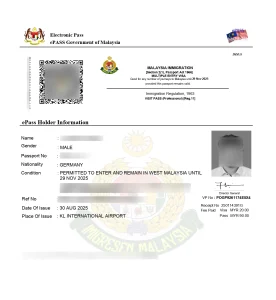
PVPs are also used to hire skilled foreign talent but for short-term arrangements.
Employers who cannot meet the new salary demands for an EP but still need to employ expatriates may consider a Professional Visit Pass (PVP) instead – here’s a quick side by side comparison of the two.
| Criteria | Employment Pass (EP) | Professional Visit Pass (PVP) |
| Purpose | Long‑term employment with a Malaysian company | Short‑term assignments, projects, training, or consultancy |
| Work arrangement | Formal employment contract with local entity | Remains employed by overseas company (in most cases) |
| Salary requirement | RM3,000 – RM10,000 (higher after June 2026) | No minimum salary |
| Validity | 1 – 5 years (longer after June 2026) | Up to 12 months total |
| Renewability | Infinitely renewable | Renewable once (and not guaranteed) |
| Dependants allowed | For Category 1 & 2 | No |
| MyFutureJobs requirement | Required for most roles <RM15,000 salary | Not needed |
Based on the above, a PVP is closer to a pre-revision Category 3 EP than the revised Category 3 EP itself! Crucially, they allow eligible employers to hire expatriates with no minimum salary requirement so while not a perfect substitute, PVPs can serve as an interim solution in certain scenarios.
And with that, all that’s left is a shameless plug for our services!
Why engage MISHU for your EP renewal
While employers can handle their own EP renewals, inexperienced applicants have a high risk of being rejected because one form wasn’t stamped correctly!

Average applicant after enduring Immigration’s love of forms.
An experienced visa service provider reduces risk by:
- pre‑evaluating eligibility
- ensuring correct EP category selection
- managing ESD compliance, and
- verifying documentation before submission
Furthermore, they are also experienced in handling follow up queries from Immigration officers and can help direct expatriates and employers on how to speak to officers. Yes, this applies to any of the highly capable visa application service providers in Malaysia – but we’d prefer you to hire MISHU over them!